
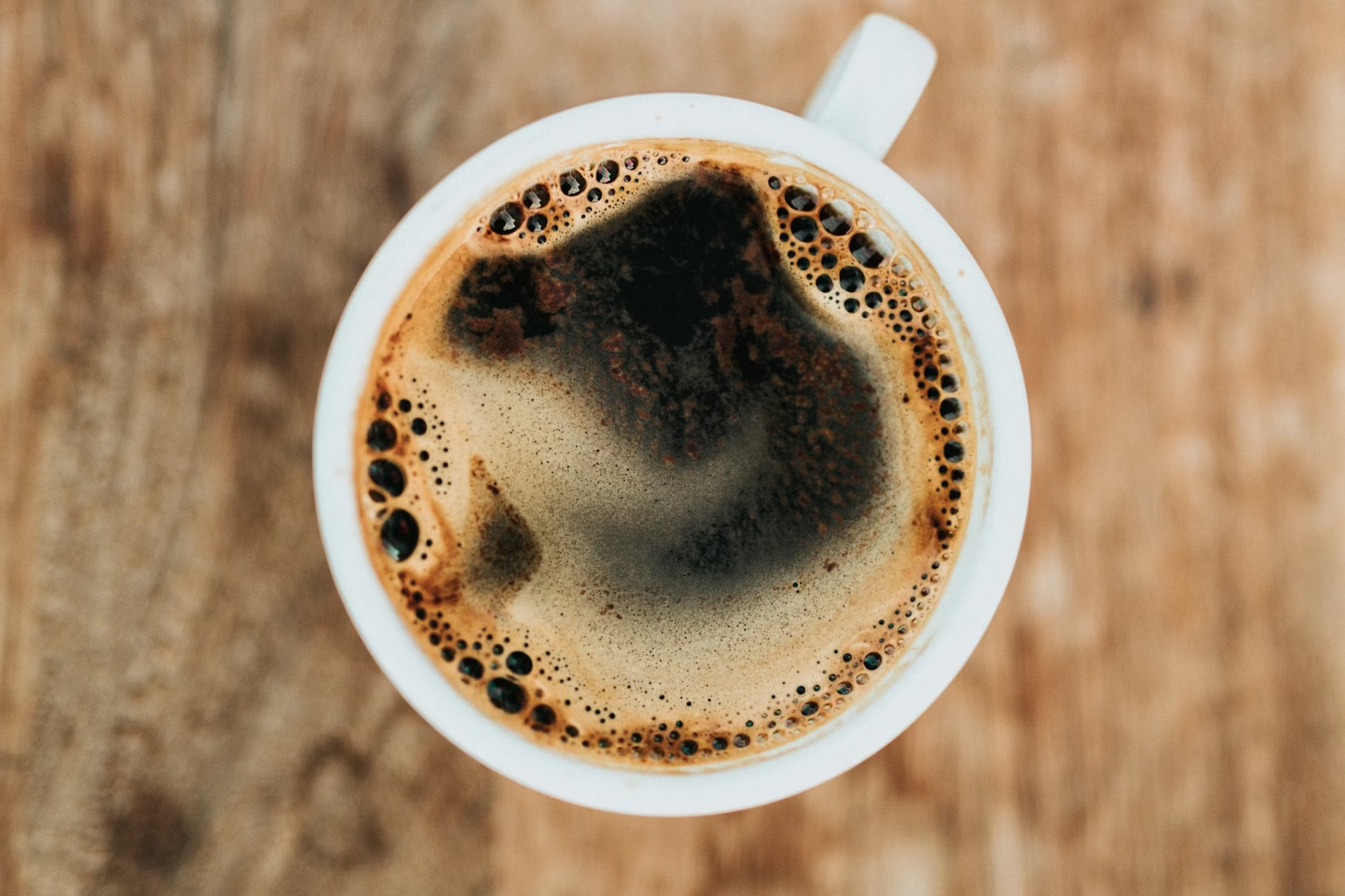
- Rising temperatures, erratic rainfall and extreme weather are making coffee production less predictable across major growing regions.
- Arabica is especially vulnerable, pushing farmers, roasters and researchers to look at shade systems, new varieties and more climate-resilient production.
Your morning coffee is becoming harder to grow.
Climate change is reshaping coffee production across the world, from Brazil and Vietnam to Ethiopia, India and Central America. The issue is no longer a distant sustainability concern. It is already affecting harvests, prices, quality and where coffee can be grown.
A 2025 FAO study linked a nearly 40 percent rise in coffee prices in 2024 to supply disruptions driven largely by unfavourable weather. The pressure has not disappeared. The International Coffee Organization reported that coffee prices remained elevated in 2026, even as markets weighed improving supply against high shipping and energy costs.
The coffee belt is shifting
Coffee grows best in a narrow set of conditions: moderate temperatures, reliable rainfall, good humidity and stable seasons. Those conditions are changing.
Arabica, the species used for much of the world’s specialty coffee, is particularly sensitive to heat. A 2026 Rabobank analysis found that 8 percent of current arabica growing areas are already unsuitable, with that share projected to rise to 20 percent by 2050.
Some regions may become less reliable, while others could gain suitability. Rabobank noted that Ethiopia may benefit in some areas, with suitable zones expanding and highly suitable areas potentially increasing. But that does not make the shift easy. Moving coffee production is not like moving a factory. Farms, trees, infrastructure, workers and local knowledge are rooted in place.
Heat is becoming a bigger threat
Extreme heat is one of the clearest problems.
Coffee plants are stressed by high temperatures, especially during flowering and fruit development. Too much heat can reduce yields, lower bean quality and make crops more vulnerable to pests and disease.
A Climate Central analysis reported by The Guardian found that the world’s top five coffee-producing countries experienced an average of 57 additional days per year above 30°C from 2021 to 2025. Brazil saw 70 additional hot days, while Ethiopia saw 34.
That matters because coffee is not only a crop. It is the livelihood of millions of farmers. The FAO notes that smallholder farmers account for about 80 percent of global coffee production, making climate shocks a direct threat to rural incomes as well as consumer prices.
Arabica is under pressure, robusta is gaining attention
The climate risk is also changing the balance between arabica and robusta.
Arabica is prized for its smoother, more complex flavor, but it is generally more sensitive to temperature swings and disease. Robusta is hardier, grows at lower elevations and can handle warmer conditions better, though it is often associated with stronger, more bitter coffee.
That is one reason robusta has become more important in the global market. Global Coffee Report noted that robusta now represents almost 44 percent of global coffee production, compared with about 28 percent in the early 1990s.
This does not mean arabica is disappearing. But it does mean the future of coffee may include more blends, more robusta innovation and more pressure on specialty producers to adapt.
Farmers are adapting, but the cost is high
Adaptation is already underway.
Farmers are planting shade trees, improving soil health, using irrigation more carefully, experimenting with new varieties and moving production to higher elevations where possible. Research groups are also working on coffee plants that can better withstand heat, drought and disease.
World Coffee Research says improved varieties are one of the most powerful tools for climate resilience, and that improving coffee farm productivity can reduce greenhouse gas emissions while helping farmers adapt.
But adaptation is expensive. Smaller farmers often have the least access to finance, insurance, irrigation, technical support and new planting material. That creates a difficult gap: the farmers most exposed to climate risk are often the least equipped to respond quickly.
Weather volatility is also hitting prices
Coffee prices are becoming more sensitive to weather news.
Brazil, the world’s largest coffee producer, is a good example. Reuters recently reported that Brazil could export a record coffee volume in the 2026/27 crop year, helped by strong production expectations. But traders were still watching El Niño closely because excessive heat could affect the flowering stage later in the year.
That is the new coffee market: strong harvests can still be overshadowed by climate uncertainty.
For consumers, this may show up as higher prices, smaller package sizes, reformulated blends or more expensive specialty coffee. For roasters and cafés, it means sourcing will become more strategic and less predictable.
What it means for coffee drinkers
The most immediate change for coffee drinkers is price.
Climate-related supply disruption can push up the cost of green coffee, which eventually affects supermarket shelves, cafés and restaurants. But the longer-term change may be taste. As growing regions shift and producers adapt, the flavor profile of coffee could change too.
Some coffees may become rarer. Some origins may become more expensive. New varieties and robusta blends may become more common. Specialty coffee could become even more tied to climate resilience, traceability and farmer support.
The bigger picture
Climate change is not ending coffee. But it is making coffee harder, riskier and more expensive to produce.
The future of coffee will likely depend on three things: how quickly farmers can adapt, how much support smallholders receive and whether the industry can develop resilient varieties without losing the flavor and diversity that make coffee so valuable.
For now, the message is clear: the cup of coffee on the table is connected to a global climate story that is already unfolding on farms.

Jacob Anderson is a food journalist at EatGazette.com, covering culinary trends, food culture, and sustainability. He discovered his passion for storytelling while earning his journalism degree at the University of Wisconsin–Madison, where he first began exploring the deeper stories behind what we eat.